Basic shear handling
Basic shear handling
This example applies the redistribution logic to a real model in PREFAB, from turning the option on to reading the Full result.
For the logic behind this example, see how the plastic redistribution works.
The model
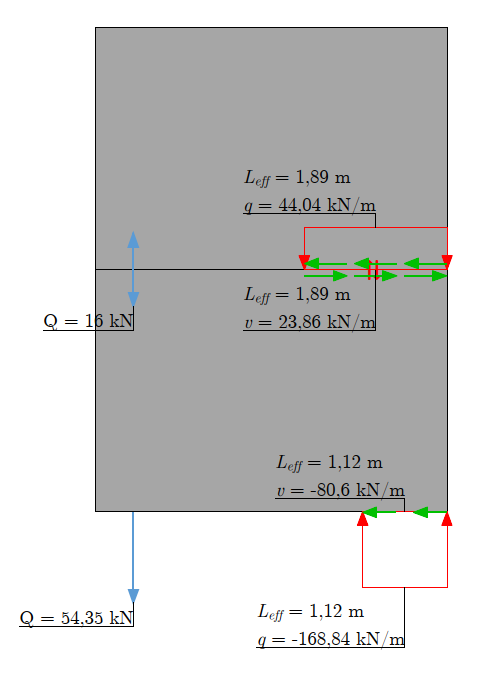
The model is two storeys, with one wall stacked directly on top of the other. Both walls are anchored, with edge connections based on friction. Each wall carries a simple vertical load on top, plus a horizontal wind load.

Based on FEM-Design
Based on FEM-Design's own results, sliding is an issue at the edge connection: the shear force exceeds the friction capacity available from the compression force.
Turning on the redistribution
In Data handling, switch to New plastic distribution and choose Full.
For what your model needs before this option gives a valid result, see New optimized plastic redistribution and the checklist.
Full
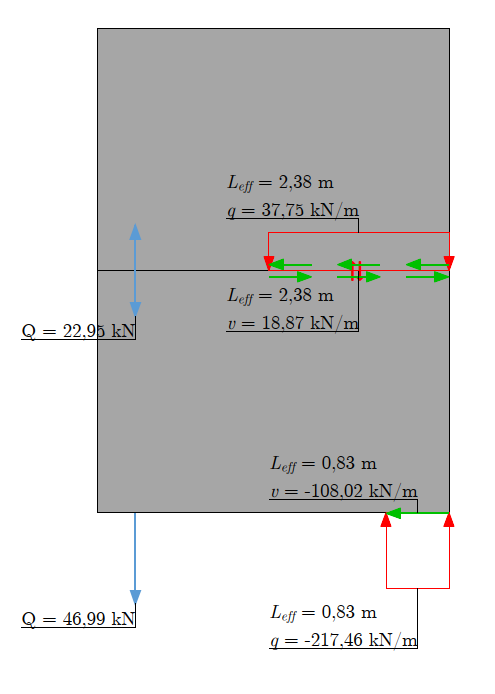
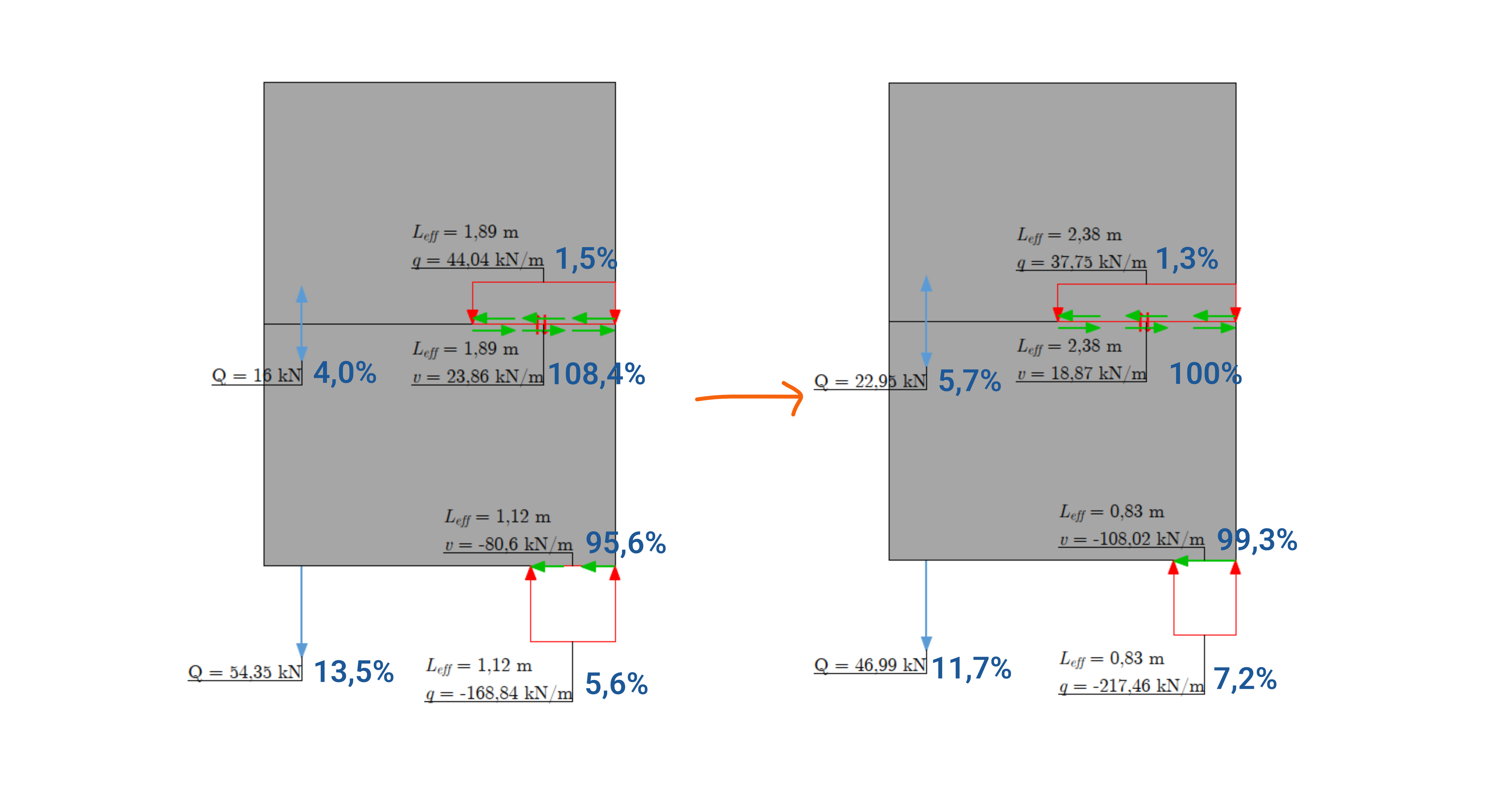
With the New optimized plastic redistribution, PREFAB resolves the sliding issue by increasing the tension in the truss, which increases the compression at the edge connection and, with it, the friction-based shear capacity.
Reading the result
The tension in the top wall's anchor is increased, for the reason discussed above, to bring the sliding utilization back to . At the bottom wall's anchor, the tension is actually decreased. This levels out the utilization of the truss and the compression/shear zone between the two storeys.
For the general rules behind these results, see how to read the results.